

Emergency Responder Radio
Coverage Compliance Verification
Do I need a Public Safety Communication System?
If the local emergency radio network meets the following criteria within your building there is a good chance your building does not require a Public Safety Communication System. Requirements vary based on the building’s location but check with the local fire department or Authority Having Jurisdiction (AHJ) to confirm your specific situation.
Are 99% of the areas considered critical by the local authorities covered by the local emergency radio network?
Are 90% of the non-critical areas covered by the local emergency radio network?
In order for an area to be considered covered, the minimum signal strength of the local emergency radio network should be -95 dBm.
I might need a Public Safety Communication System. What do I need to know?
Each Public Safety Communication System has to meet a minimum set of requirements. Exact requirements vary based on local jurisdiction. Check your local building and fire codes for your specific requirements. Below are some general requirements commonly adopted across the U.S.
Minimum Signal Strength: According to the NFPA and IFC, minimum signal strength of -95 dBm is required to satisfy coverage.
Equipment Enclosures: The NFPA and IFC specify that all equipment supporting the public safety network must be housed in NEMA-4 compliant enclosures.
Backup Power Solution: Equipment that supports the public safety network must be able to function for 24 hours without the primary commercial power source.
Antenna isolation: The NFPA dictates that antenna isolation must be 15 dB higher or between donor and coverage antennas.
Fire Ratings: Cables connecting public safety network equipment must meet a two-hour fire rating. This also applies to the room that the equipment is housed in.
System Frequencies: The NFPA requires that if a radio enhancement system is necessary the system must be capable of supporting all relevant frequencies as provided by the local authority having jurisdiction.
System Components: Signal boosters including BDAs, shall have FCC type acceptance and must be operated in accordance with commission rules.
System Monitoring: An automatic-monitoring system is required to report antenna malfunctions, public safety network equipment failure, power loss and battery failure or low charge..
What are the different type of solutions?
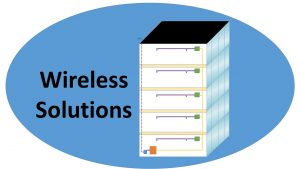
Wireless solutions exist for all sizes and types of buildings. From Pico cells which are ideal for small footprint applications where enhancement is only needed for a single carrier all the way to neutral host active DAS solutions frequently used in large venues enhancing service for multiple network operators.
What technologies and frequencies do I need?

The local authority can help you determine the exact frequencies and technologies. As a part of our service, Pierson Wireless can help engage your local authority and to determine exact frequencies and technologies. Pierson Wireless solutions support common Public Safety technologies such as Project 25 (P.25) and FirstNet. Frequencies supported include UHF/VHF/700/800 MHz and 900 MHz.
Connect with Pierson Wireless to Learn More!


PIERSON WIRELESS NEWS

Multi Beam Antennas Are Changing The Way Engineers Design Wireless Solutions
Multi beam antennas are changing the way engineers design in-building wireless solutions for certain stadiums and arenas. In February, Verizon . . .

Managing the Costs of Bringing 5G to In-Building
Large-scale 5G commercial deployments are expected to begin making their way across the U.S. by 2020. Now is the time . . .